Last updated on October 11th, 2026 at 07:19 pm
Last updated October 2026
Thinking about a Douro river cruise but not sure it’s the right holiday for you?
I’ve been a travel professional for 38 years, and I’ve done this cruise from the other side – as the tour manager looking after 140 guests on a full Porto to Salamanca sailing. That means I didn’t just see the highlights. I saw which excursions guests loved, which ones they found tough, where the long coach days were, and what I’d tell a friend before they booked.
This is that honest guide. By the end, you’ll know whether the Douro suits you – and if it does, how to choose the right cruise line.
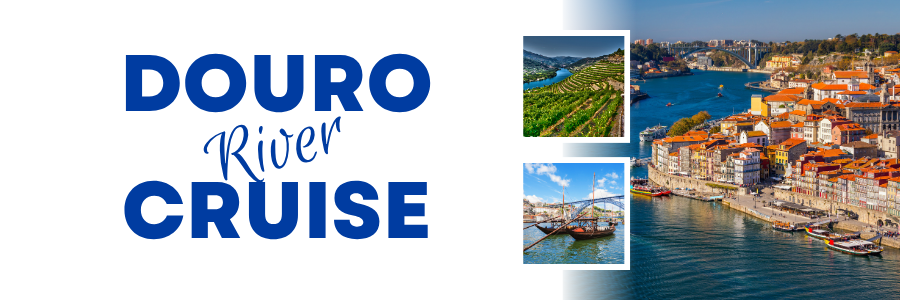
Is a Douro River Cruise Right for You? My Quick Verdict
You’ll love it if you:
- Want spectacular scenery every single day – terraced vineyards, hilltop villages and dramatic gorges
- Enjoy wine (especially port) and local food
- Like the idea of unpacking once and having everything organised
- Are curious about the engineering – the river locks are a genuine highlight
Think carefully if you:
- Have walking difficulties – the valley is steep and many villages are hilly and cobbled
- Get travel sick – several excursions involve twisty mountain roads by coach
- Want lots of free time in towns – the Douro is more of a touring holiday than a city-hopping cruise
Douro River Cruise: Key Facts
| Typical length | 7 nights (8 days) |
| Usual route | Porto (Vila Nova de Gaia) to Barca d’Alva/Vega de Terrón on the Spanish border, and back |
| Distance cruised | Around 135 miles (200 km) each way |
| River locks | 5 – Crestuma-Lever, Carrapatelo, Régua, Valeira and Pocinho |
| Season | Generally March to November, with some operators now sailing into December |
| Departure point | Vila Nova de Gaia, across the river from Porto – about 30–40 minutes from Porto airport |
| Typical excursions | Lamego, Mateus Palace, a hilltop village, Salamanca (Spain), a port cellar, Porto city tour |
Why Are Douro River Cruises So Popular?
The Douro is one of Europe’s best-loved river cruise destinations, and new ships keep arriving to meet demand. Having sailed it, I understand why.
The Scenery Never Stops
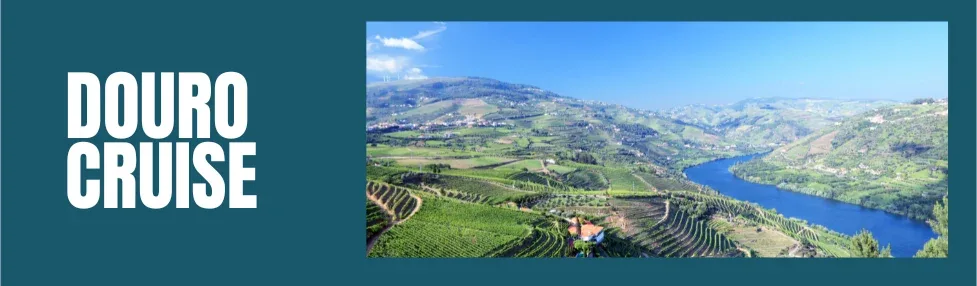
Steep hillsides of cascading vineyards, whitewashed quintas, tiny villages and rocky gorges. On some rivers there are dull stretches – on the Douro there’s always something to look at.
The Oldest Demarcated Wine Region in the World
The Alto Douro Wine Region is UNESCO-listed, and wine has been made here for around 2,000 years. Every cruise includes at least one tasting, and most include several.
Port is the star. The grapes are grown in the valley and the wine has traditionally been aged in the lodges of Vila Nova de Gaia, where your cruise starts and finishes.
You’ll also see plenty of Vinho Verde on menus. Strictly speaking it comes from the Minho region just north of the Douro, but it’s everywhere in Porto. It’s fresh, light and slightly spritzy – I love it.
Little Tip from Me: Try Licor Beirão while you’re in Portugal. It’s a herbal liqueur best enjoyed simply – on the rocks.
A Touring Holiday on the Water
This is the thing most people don’t realise before they book. A Douro cruise is really a touring holiday: some of the travelling is done by ship, and quite a lot is done by coach. That’s not a criticism – it’s how you reach places like Lamego, Mateus and Salamanca – but it’s worth knowing.
What Day by Day on a Douro Cruise Is Really Like
Most Douro cruises follow a very similar route, though the order of excursions can vary. Here’s what we did, with my honest notes on each day.
Day 1 – Arriving in Porto and Boarding
The airport to Vila Nova de Gaia transfer is around 22 km and took about 40 minutes. Our group of 140 filled three coaches, so I sent two ahead to avoid everyone arriving at the ship at once.
If your flight lands before midday, don’t expect to board straight away – the ship is usually still turning around from the previous cruise.
Vila Nova de Gaia is a lovely place to spend your first afternoon: a riverside promenade, cafés, the port lodges and a cable car with great views back over Porto. We spent the first night moored here.
Little Tip from Me: Pack sunglasses, a hat and anything else you need in your hand luggage, so you can head straight to the sun deck while your suitcase is delivered to your cabin.
Day 2 – Cruising to Régua and the Lamego Excursion
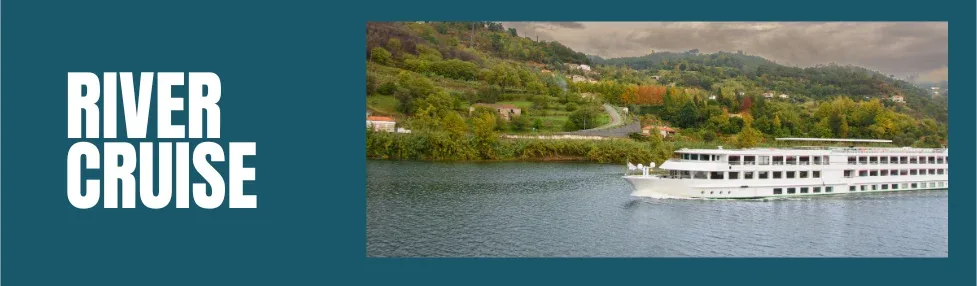
Today is a big cruising day – around 100 km (62 miles) and roughly 7 hours. You pass through your first two locks:
- Crestuma-Lever – 25 metres high, about 22 km from Gaia
- Carrapatelo – 57 metres high, one of the highest river locks in Europe
Going through Carrapatelo on a big ship, with the lock walls rising up beside you, was one of the most memorable moments of the whole trip.
Little Tip from Me: Water can drip down from the lock walls as you pass through, so bring a hat if you’re watching from the sun deck.
Lamego excursion (3.5 hours): Lamego sits in the hills about 10 miles from Régua. The highlight is the Sanctuary of Nossa Senhora dos Remédios, with its beautiful baroque staircase of nearly 700 steps – pilgrims still climb it on their knees. You can walk down into town or take the coach to avoid the steps. Lamego itself has a pleasant square and good coffee shops.
In the evening, local musicians came on board for a Portuguese folk show.

Day 3 – Régua to Pinhão
A short, relaxed morning – about 24 km (15 miles) and 3 hours, through the 41-metre Régua lock. Pinhão is right in the heart of port country and the scenery here is some of the best of the whole cruise.
Day 4 – Pinhão to Vega de Terrón and Castelo Rodrigo
Around 82 km (51 miles) and 7 hours, through the Valeira (48 m) and Pocinho (49 m) locks, to Vega de Terrón on the Portuguese–Spanish border where the Douro meets the Águeda.
Figueira de Castelo Rodrigo excursion (3.5 hours): A 30-minute drive on small roads to a pretty hilltop village with narrow streets and little cafés. Some guests found the sloping cobbled entrance hard going and I helped several over it – worth knowing if you’re unsteady on your feet.
One of my favourite moments of the trip happened here: a few guests and I found a tiny café down a cobbled lane and spent a lovely hour chatting over drinks.
Not Sure Which Douro Cruise to Choose?
Ships, cabins, included excursions and accessibility vary a lot between cruise lines. I’m an independent travel agent – tell me what matters to you and I’ll compare the options for you, free of charge. If you book a cruise with me it costs you the same as booking direct and you get all that extra service too.

Day 5 – Salamanca, Spain (Full Day)
This is the longest day – about 10 hours in total, with a roughly two-hour coach journey each way (about 121 km).
The first part climbs out of the valley on very twisty roads. On the way, we stopped at a viewpoint where huge vultures were floating on the thermals at eye level – unforgettable.
Little Tip from Me: I felt travel sick on the twisty section, so take something if you’re prone to it. On our trip there was no comfort stop on the way – only on arrival in Salamanca – so check this with your cruise line if it matters to you.
Salamanca is a UNESCO-listed city with one of Europe’s oldest universities, two cathedrals and a pedestrianised centre. The day usually includes a guided walk to the magnificent Plaza Mayor, lunch and free time. Our group also enjoyed a flamenco show.
I have to be honest – I only saw the start of the walking tour. One of our guests needed urgent care, so I spent the rest of the day with her in hospital. It’s a good reminder of why travel insurance matters, and of the value of having an experienced tour manager with you.
Day 6 – Mateus Palace and Back Downstream
An early start (7am) to cruise around 102 km back downstream to Régua, through Pocinho and Valeira again.
Mateus Palace excursion (3.5 hours): You’ll probably recognise the palace from the Mateus Rosé label – maybe even from the bottle you once used as a candle holder! We had a guided tour inside and time in the beautiful gardens.
Our visit was cut short because one of the locks had a fault, which affected every ship’s schedule. It’s rare, but it happens on rivers, and a good crew will re-plan around it.
We then cruised on to Bitetos, arriving late. The farewell dinner was held tonight rather than on the final night, because many of the crew live locally and go home for the last evening.
Day 7 – Back into Porto, Port Cellar and City Tour
About 50 km back to Vila Nova de Gaia, arriving around 9am.
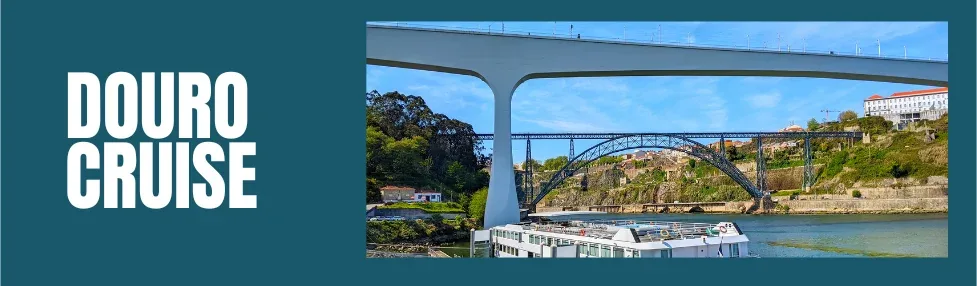
Little Tip from Me: Get up early for this one. I headed to the sun deck with a coffee and had it all to myself as Porto appeared through the morning mist and we sailed under the bridges. It was magical.
Port cellar visit (1.5 hours): A short walk to a historic lodge in Gaia to learn how port is made, followed by a tasting (I was working, so I had to watch!).
Porto city tour (3.5 hours): Mostly by coach with short walks – good if you don’t want to tackle Porto’s steep streets on foot. Highlights included the Sé Cathedral, where Philippa of Lancaster married King João I in 1387, and students in their black university gowns – said to have inspired J.K. Rowling, who lived in Porto.
Day 8 – Disembarkation
With later flights, we were taken to a hotel in the city to use as a base for the day – lunch, somewhere to leave hand luggage and time to explore Porto – before transferring to the airport. If your flight is late, ask your cruise line what they provide.
Best Time for a Douro River Cruise
The Douro Valley gets much hotter than Porto. The upper valley sits in a sheltered gorge, and summer days regularly reach the 30s°C. Here’s roughly what to expect inland:
- March–April: Mild and fresh, green landscape, some rain. Quieter.
- May–June: Warm, pleasant and one of the most popular times.
- July–August: Hot – often low to mid 30s°C. Lovely on deck, tiring on excursions.
- September–October: Harvest season. Warm days, golden vineyards and my top pick for wine lovers.
- November–December: Cooler and quieter, with fewer sailings.
My honest advice: the best time is the one where the temperature suits you. If heat bothers you, avoid July and August.
My Honest Pros and Cons
What I loved
- The sun deck. It’s my favourite feature of any river cruise – watching the scenery slide by with a drink in hand.
- The locks. Impressive engineering and great fun.
- The quiet countryside after the bustle of Porto.
- The crew. Mostly local, hard-working and full of stories about the valley.
- Local food on board, including Portuguese dinners and entertainment.
What to be aware of
- Hills and cobbles. This is not the easiest river for limited mobility. Check each excursion’s walking level before booking.
- Coach time. Especially the Salamanca day.
- Popularity. It’s a busy river, so moorings and sights can feel crowded in peak season.
- Lock delays can occasionally change the plan.
Which Cruise Lines Sail the Douro?
There’s a Douro cruise for almost every budget and style, from all-inclusive luxury to great-value options. Lines sailing the Douro include Riviera Travel, Viking, Uniworld, AmaWaterways, Scenic, Emerald, APT, Avalon and CroisiEurope.
The big differences are:
- What’s included – flights, drinks, gratuities and the number of excursions
- Ship style and size – newer ships may have pools, balconies and larger cabins
- Who you’ll travel with – many UK lines are mostly British guests; others are mainly North American
- Pace – some itineraries include more active or optional excursions
If Riviera Travel is on your shortlist, see my Riviera Douro cruise guide for their ships, cabins and day-by-day itinerary – I’m a Riviera River Cruise Expert.
Comparing these yourself takes hours. It’s exactly the kind of thing I do every day.
Let Me Find Your Perfect Douro Cruise
Tell me your dates, budget and what matters most – cabin, pace, accessibility or wine – and I’ll come back with honest recommendations. No obligation and also no extra cost if you do decide to book with me.
Douro River Cruise FAQs
How long is a Douro river cruise?
Most are 7 nights. Some lines add pre- or post-cruise stays in Porto or Lisbon.
Where do Douro cruises leave from?
Usually Vila Nova de Gaia, on the opposite bank of the river from Porto’s old town.
How do I get to the start of a Douro cruise?
Fly to Porto – there are direct flights from several UK airports – and it’s around 30–40 minutes to the ship. Lisbon is about three hours away by train if you want to combine the two.
Is a Douro cruise suitable if I have mobility issues?
It can be, but choose carefully. The terrain is steep and several villages are cobbled. Some lines offer gentler excursion options. Ask before you book – or ask me to check for you.
Do you visit Spain on a Douro cruise?
Most itineraries include a full-day coach excursion to Salamanca, about two hours each way from the border.
Where does the Douro River start and end?
It rises near Soria in Spain and flows west for about 557 miles (897 km) to the Atlantic at Porto. Only the Portuguese section is navigable by cruise ships.
My Final Thoughts
If you love scenery, wine and the idea of everything being organised for you, the Douro is a fantastic choice – and one of my favourite rivers. Just go in with your eyes open about the hills, the coach days and the summer heat, and pick a cruise line that matches how you like to travel.
Before You Book – Get My Free Douro Insider Tips
You Might Also Like

Riviera Douro Cruise 2027: Ships, Cabins & Itinerary Guide
Last updated on October 11th, 2026 at 07:19 pmLast updated October 2026 Thinking about a Riviera Tra…
What To Do in Vilamoura – Get Some Great Ideas Here
Last updated on October 11th, 2026 at 07:19 pm Wondering what to do in Vilamoura? There are plenty o…
Where to Stay in Vilamoura – Check Out These Great Hotels
Last updated on October 11th, 2026 at 07:19 pmWondering where to stay in Vilamoura? I’ve been …
How to Get to Vilamoura – All the Details You Need
Last updated on October 11th, 2026 at 07:19 pmWondering how to get to Vilamoura in Portugal? Check o…
Is Vilamoura Expensive? Find Out All The Details Here
Last updated on October 11th, 2026 at 07:19 pmPlanning on visiting Vilamoura and wondering ‘Is…
Is Vilamoura Safe? Find The Stats & Info Here
Last updated on October 11th, 2026 at 07:19 pm Are you thinking of visiting Vilamoura? Wondering …
Prime Energise Hotel Monte Gordo – What You Need to Know
Last updated on October 11th, 2026 at 07:19 pm The Prime Energise Hotel is a fitness and wellness ho…
Is Monte Gordo Algarve Worth Visiting in 2026? Absolutely it’s Great
Last updated on October 11th, 2026 at 07:19 pmAre you thinking of visiting the Algarve? Are you look…
Day Trips From Vilamoura – A Beautiful Scenic Drive
Last updated on October 11th, 2026 at 07:19 pm Are you looking for day trips from Vilamoura? Check o…